 Flooring Correct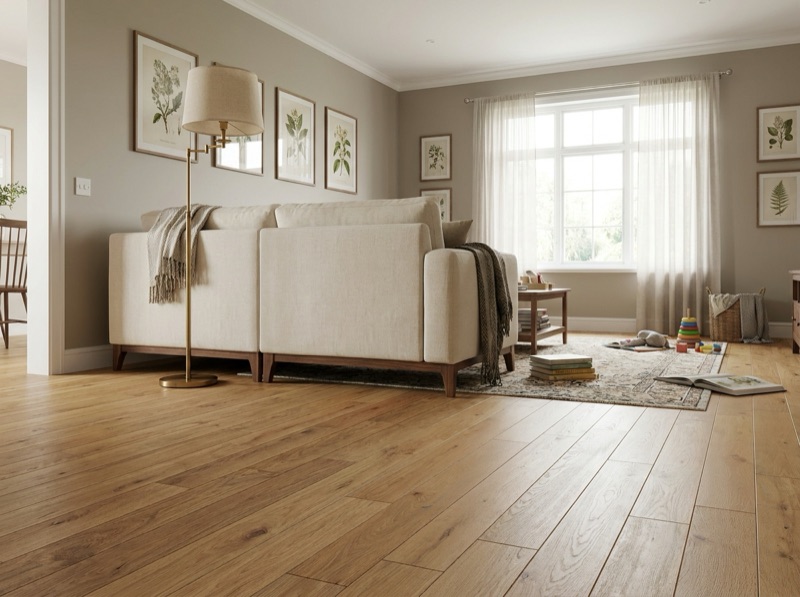
Is wood-look tile still in style?
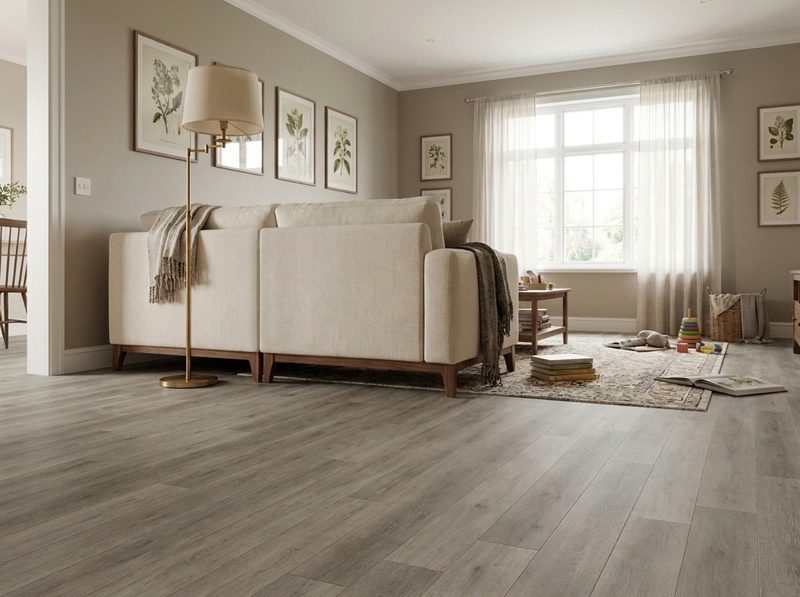
Wood-look tile is not really a style trend, it is a way to get the look of hardwood into rooms where real wood does not belong: bathrooms, entries, basements. It has held on because it solves a room problem, not because it followed a photo trend, and that is the honest reason it is still worth choosing today.
The decision under the question
The real question is not whether wood-look tile is trendy. It is whether you are spending money on a look that might date, or whether wood-look tile is different because it was never chosen for fashion in the first place. Most people land on it because a room will not tolerate the material it is imitating, and that reasoning does not go out of style the way a paint color can.
What wood-look tile actually is
It is porcelain. Fired clay, pressed and printed and textured to read as wood, which means it behaves like any other porcelain floor in every way that matters and looks like a board in the one way people care about. That is the whole reason it exists: it goes into showers, entries, laundry rooms and basements below grade, where a real board would be a mistake and where the room, not the trend, is making the call. Whether tile or luxury vinyl plank wins in a given room is argued in full on the comparison page, and that is the argument to read before you settle the material. This page is about the narrower question: whether the wood look itself, in tile form, is a fashion you will regret.
Plank width is the part people skip
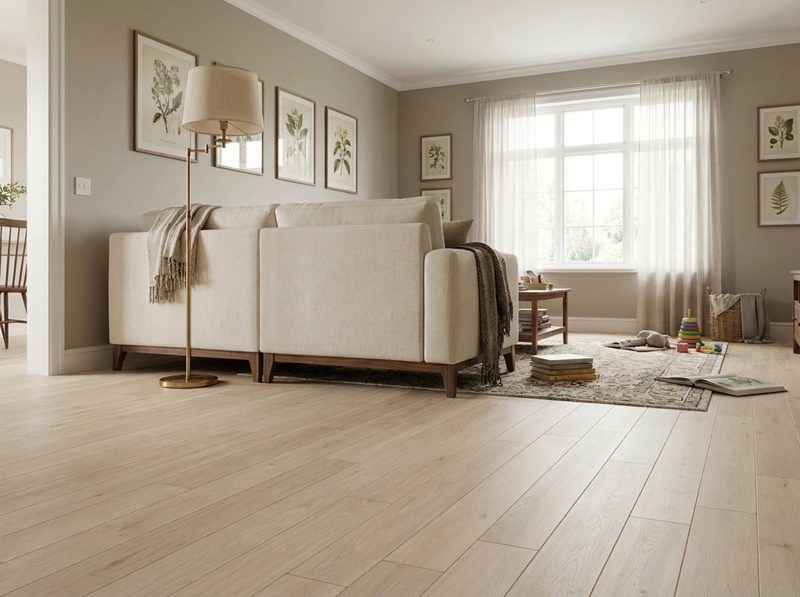
Plank width and format do more work here than the print does. Wood-look porcelain comes in long, narrow pieces meant to echo a real floorboard, and the size chosen changes how convincing the look is. A wide plank reads more like a rustic wide-board floor, while a narrower one mimics a strip hardwood pattern more closely. Neither is more correct, but matching that proportion to the style of an adjoining real wood room is one more reason to compare planks in person rather than choose from a photo.
The other thing worth asking at the rack is how many different faces the line prints. A wood-look tile is a photograph of real boards repeated across a floor, and a line with only a handful of faces will show you the same knot twice in one room once you know to look for it. A line with more faces in the rotation reads as a floor rather than as a pattern. Nobody puts that on the front of the box, so it is a question for the person at the counter, and it is the kind of thing that decides whether the look holds up in a big open room or only in a small one.
Matching the room it opens into
Width matters most where the tile has to answer to a real wood floor next door. If wood-look tile is going into an entry that opens straight into a hardwood living room, matching the color and the plank width closely enough that the transition reads as one story rather than two takes real planning, and that specific matching question has its own page, worth reading before you settle on either material.
Why the fad worry is usually misplaced
A genuinely trend-driven finish, a paint color, a cabinet hardware style, changes because taste changes and nothing about the material demands it. Wood-look tile keeps getting chosen for a structural reason: it is tile in a room that needs tile, wearing a finish that happens to look like wood instead of stone or a solid color. That reasoning does not reverse itself the way a color palette does, which is the honest answer to the style question underneath this one. A busier, more graphic tile pattern can date faster, which is a separate risk from the one this page is answering.
What to bring and look at side by side
Wood-look tile reads very differently in a small sample chip than it does across a floor, and the grout color changes it again, the same as any other tile. If you are trying to match an adjoining hardwood room, bring a real board from that floor, or a photo taken in the room's own light, rather than relying on memory. Set it beside a full-size wood-look tile plank at the Wentzville showroom and the color and grain match either works from across the room or it does not. The free in-home measure is where the rooms on either side of a transition get looked at together. Call 636-332-0654.
More about wood-look tile
How convincing it looks up close, matching an existing hardwood floor, and the grout it actually needs.
636-332-0654Digital printing puts real wood grain variation into the glaze, and the better lines register the surface texture to the print, so a knot or a grain line has a slightly different feel where your eye already expects one. From typical living distances it reads convincingly, and the giveaway, if there is one, is usually the grout line rather than the print itself.
Not automatically, and it is worth testing rather than assuming. Plank width, color depth and the direction of the grain all vary between a wood-look tile line and a specific hardwood species, so bringing a real sample from the existing floor and setting it beside candidate tiles is the only reliable way to check before ordering.
Not inherently. The grout decision, including color, joint width and whether it needs sealing, follows the same logic as any tile installation and depends on the tile's edge type and size rather than on the wood-look finish itself. Matching the grout closely to a wood-look plank is common, since a close match lets the joint disappear rather than draw a line across the boards.
Bring the sample it has to match
If wood-look tile needs to work alongside a real hardwood room, bring a board or a photo from that floor. We will set it beside full-size tile options and measure the transition at the free in-home measure.
Free estimate
636-332-0654