 Flooring Correct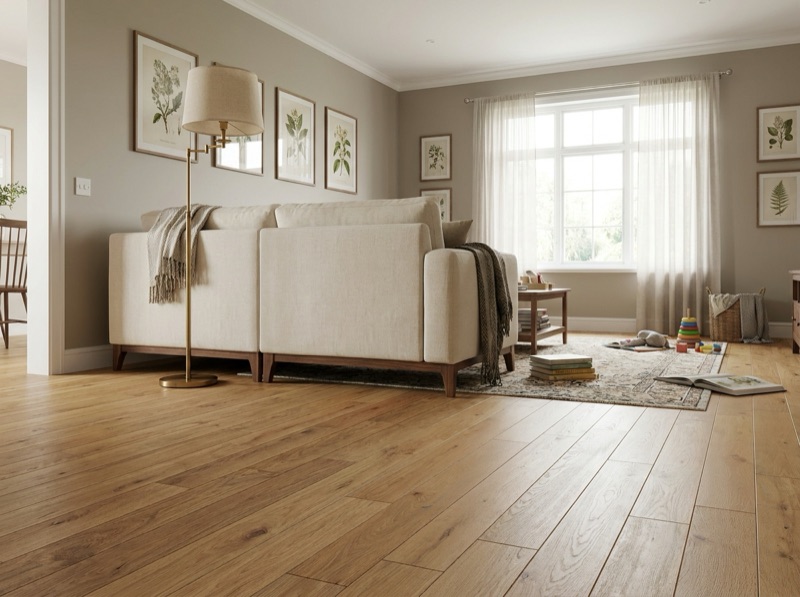
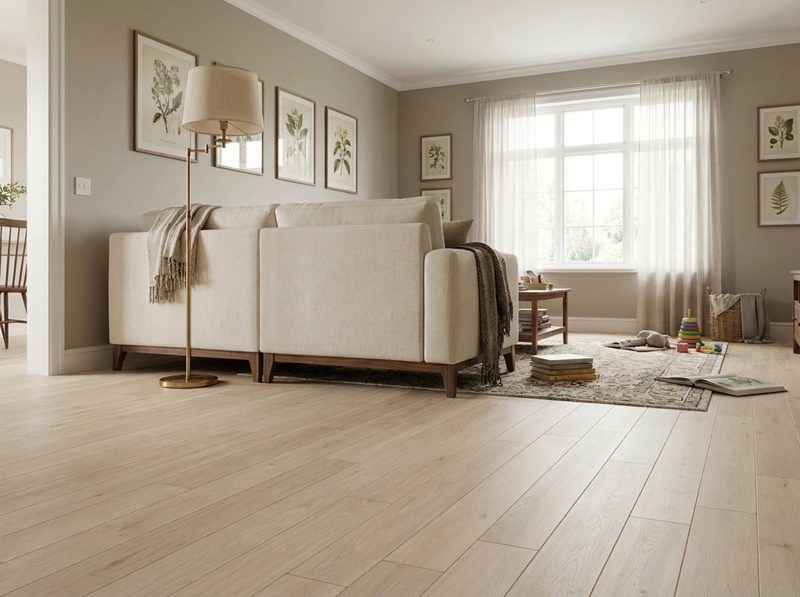
What flooring suits a farmhouse style?
Wide plank in a wood or wood-look material, with visible surface texture and a low, matte sheen. The look comes from three things together: width, which sets the scale; texture, wire brushed or hand scraped, which catches shadow instead of light; and a muted, worn tone rather than a flat, polished one. Run your hand across a sample; a photograph flattens the texture that makes the style work.
What you can test with your own hand
Run your fingers across a full-size flooring sample rather than looking at it. That single test separates a floor that will read as farmhouse in the room from one that only reads that way in a catalog photo. Wire brushing pulls the soft grain out of a board and leaves texture you can feel, hand scraping goes further and leaves a deliberate irregularity board to board, and both of them catch real shadow under real light. A smooth, printed surface can carry the same photograph and still fail the hand test, because there is nothing there for a fingertip to find.
Width does the other half of the work, and width has its own page here, covering what a wide board does to a room and how to judge one honestly before you buy. What that page does not get into is how width and texture behave together, which is the part that matters for this look. A wide board with a smooth, uniform face reads contemporary rather than worn, however wide it gets. A narrow strip with heavy scraping reads busy instead of old, because the same irregularity repeats too many times across the same stretch of floor. Texture is what carries the style. Width only sets how loudly it speaks. Decide the two in the same visit rather than one at a time.
What sheen tells you that color alone will not
Hold a sample under a bright light and tilt it. A matte or low sheen finish scatters that light into a soft, even haze, which is the quiet look the style depends on. A semi gloss or high gloss finish on the same board bounces a hard, bright reflection straight back, and that single reflection reads as considerably more finished and less worn than the style wants, regardless of what texture is milled into the surface underneath it. Sheen and texture have to agree with each other, not just with the color, or the two will fight.
What a muted tone tells you, and where it comes from
A worn, muted tone is easy to confuse with simply a lighter or darker color, and it is not the same thing. It comes from grain variation, board to board, rather than a single flat pigment applied evenly. A sample with real variegation looks slightly different every time you glance at it, the way a genuinely old floor would, where a flat, uniform tone reads as new no matter how pale or how dark it is set. This is the same mechanism behind why some colors hide dirt better than others, and that page covers it from the maintenance side if that matters to your household.
What the field test does not tell you
A hand test and a tilt under the light will not tell you how a material holds up in your specific kitchen, mudroom or basement, because that depends on water exposure and traffic more than on texture or tone. It also will not tell you whether solid hardwood or a wood-look material is the right construction for a given room; that decision runs on moisture and subfloor, and the hardwood category page and the luxury vinyl page both cover it honestly for the rooms each one belongs in. The look and the material choice are two separate decisions, and the field test only answers the first one.
It also will not tell you how the finish reads next to trim, cabinets or a wall color you have not chosen yet. That is a separate decision, and matching a floor to existing trim is worth reading before anything is ordered, because trim is usually the surface already in the room that nobody plans to change.
Where to actually run the test
A small chip under a showroom track light will not show you what a semi gloss reflection does across a whole room, and it will not let you feel the difference between wire brushed and hand scraped with any confidence. Come run your hand across full-size pieces on our own floor at 15570 Veterans Memorial Pkwy, then take the shortlist home and set it under your own light for a day before deciding. The free in-home measure is where the room itself, and what it needs beyond looks, gets settled. Call 636-332-0654.
More on farmhouse texture, tone and material
Whether the look requires solid wood, gray versus brown, and how close luxury vinyl actually comes to the real texture.
636-332-0654No, and the look and the construction are separate decisions. Wide, textured, low sheen finishes are available in solid hardwood, engineered hardwood and luxury vinyl plank, so the room's own moisture and traffic conditions can decide the material without giving up the style. A basement or a kitchen can carry the farmhouse look through a wood-look material built for that room instead of forcing solid wood somewhere it does not belong.
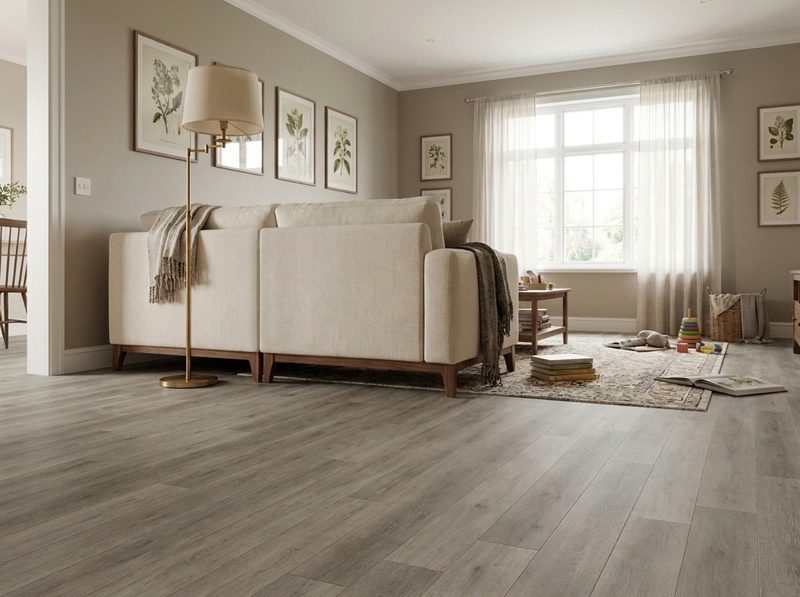
Farmhouse is defined more by texture, width and a muted, variegated tone than by any single color family. A gray or whitewashed finish with real texture and low sheen carries the style as well as a warmer brown does, provided the surface still has genuine variation rather than one flat, uniform tone underneath the color. Undertone still matters against cabinets and trim the way it would with any other floor color.
Better luxury vinyl plank is embossed in register, meaning the texture pressed into the surface lines up with the grain printed underneath it, so a knot you can see is a knot you can feel. It will not feel identical to a hand scraped solid board, but the gap has closed considerably, and it is worth running your hand across current samples rather than judging the category by an older memory of it.
Feel it on our floor first
A photo cannot show you what wire brushing feels like under a hand or what a low sheen does under real light. Come run your hand across full-size pieces before anything gets ordered.
Free estimate
636-332-0654