 Flooring Correct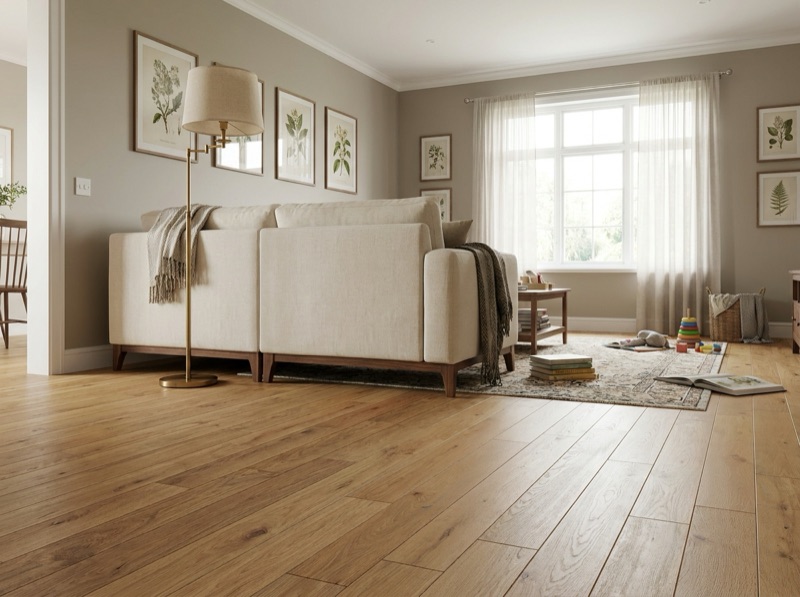
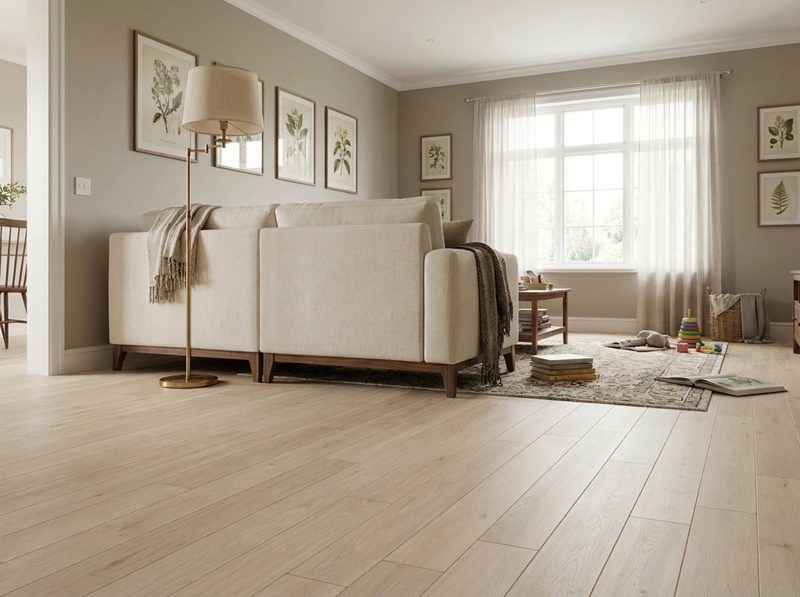
What should I ask before buying flooring?
Ask about your house before you ask about the product. What is under the floor now, whether the room has ever had water in it, how much clearance sits under the doors, and how the new floor meets the one in the next room. Then ask what the product needs underneath, and what its warranty is written against.
Most people arrive at a flooring store holding a brand name and a number off a box. Neither one is the question that decides how the floor turns out.
Why the brand question comes out first
It is the vocabulary the internet hands you. Product listings are organized by manufacturer, then by a specification number, so that is what you learn to compare and that is what you carry through the door. It is not a foolish habit and it is not your fault. It is simply the wrong end of the problem, because the same plank behaves one way in a basement and another way in an upstairs bedroom, and no number printed on the carton knows which of those you have.
A floor succeeds or fails at the boundary with your house
Almost nothing that goes wrong with a floor is the floor. It is what was underneath it, what came up through it, what it had to meet in a doorway, or how far it moved with the season. That is why our room pages argue by condition rather than by product, and why a slab below grade rules out material an upstairs room would happily take. The useful questions all sit at that boundary.
Ask these about the room first
- What is under this floor. Wood joists over a crawl space or a basement, or concrete. It is the single fact that changes a shortlist most.
- Has this room ever had water in it. A dishwasher that let go once, a basement that took an inch in a storm, a washer hose. Say it out loud even if it was years ago and even if it was dealt with.
- How much room is under the doors. A new floor adds height, and a door that will not clear the new floor is its own separate job.
- What this floor has to meet, and where. The tile in the bath, the carpet at the top of the stairs, the step down into a sunroom, the threshold at the front door.
- Who lives on it. Dogs with long nails, a toddler, an office chair on castors, the door everyone comes in wet through in February.
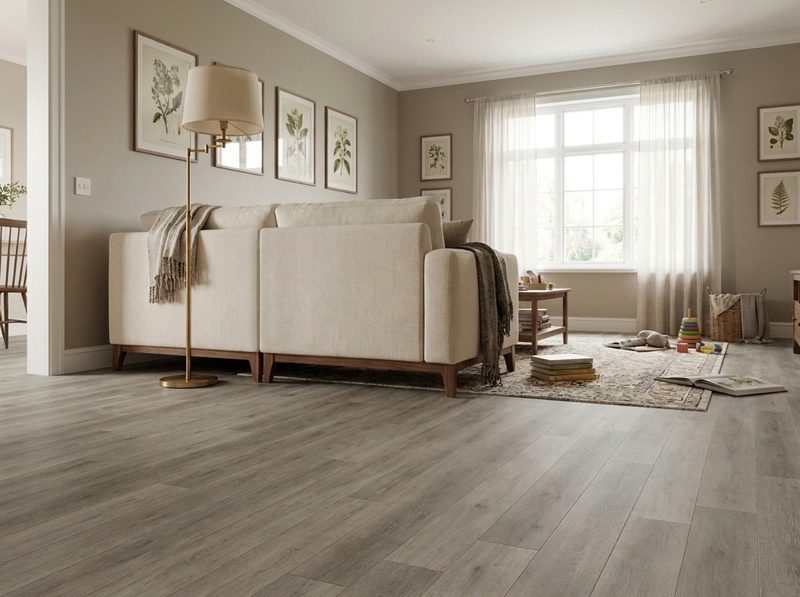
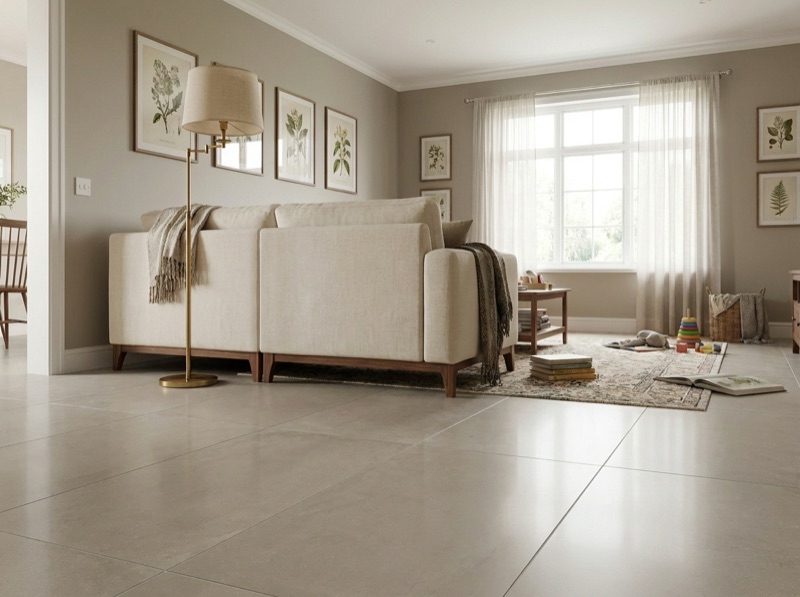
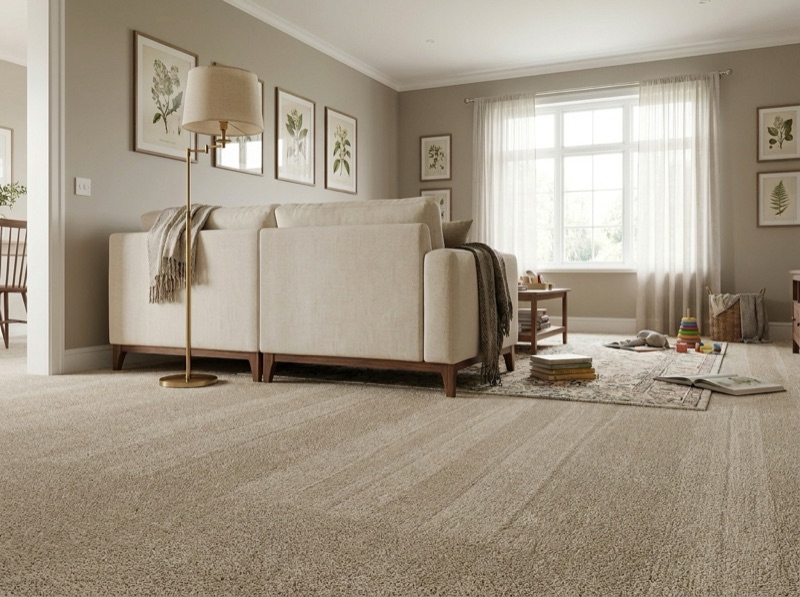
- Which way the light comes in. A room that takes hard afternoon sun reads one color at ten in the morning and a different one at four.
Then ask these about the product
- What does this need underneath it, and is that included. Cushion, underlayment, a moisture barrier over concrete. The answer should be specific to the product, not general.
- What is the wear surface, and what happens once it is worn through. Some floors can be brought back and some cannot, which is the whole of the refinishing question.
- What is the manufacturer's warranty written against, and what does it require of the subfloor and the installation. Read what it excludes before you read what it covers.
- If a plank or a tile gets damaged in three years, what is the repair. Replacing one piece is realistic on some constructions and not on others.
- Is this run still in production. A discontinued line can be a fine buy and a difficult one to extend later.
- What is actually printed on the label. Coverage per box, construction, the ratings on the back. Reading a sample label is a skill worth twenty minutes of your life.
The ones nobody can answer over the phone
Three of the questions above are honestly unanswerable until somebody stands in the room. How flat the subfloor really is. How much clearance is left under each door once the new floor adds its own height. And how two materials of different thickness are going to meet in a doorway without looking like an accident. The free in-home measure exists for exactly those, and it is also the last comfortable moment to change a recommendation.
What lands on the document afterward is a separate question with its own page. Everything else on this list you can work through at the showroom, standing at the rack with samples in your hands. Come with your answers to the room questions and the product questions get a great deal shorter.
What a good answer looks like when you get one
You are not testing whether somebody knows the catalog. You are testing whether the recommendation is being built out of your conditions or out of a feature list. An answer that rules something out, and says why, is worth more than an answer that says everything will be fine. Our own eight steps put the consultation ahead of product selection for that reason, and the showroom page describes what that first pass sounds like.
If you would rather sort the room questions out at your kitchen table first, the floor finder asks seven of them and hands back a ranked shortlist you can bring in with you. Then call 636-332-0654 and we will book the measure that settles the rest.
More of what to ask before you commit
Brand recommendations, the floor coming out, and the questions that are yours rather than ours.
636-332-0654It is worth asking, as long as you follow it with why. A recommendation that comes back with a reason about your room is real information. A recommendation that comes back as a feature list is a catalog talking. Here every category sits on the same floor, so the honest answer to which brand is usually another question about what the room has to survive.
Ask what is under it, because that is what the new floor will actually sit on and nobody knows for certain until it is up. Ask how the removal is handled and who is doing which part, and get it settled in advance rather than on install morning. Carpet lifts quickly. Mortared tile over concrete is a different job entirely.
Two things. How long you intend to live with this floor, because a five year answer and a twenty year answer point at different materials and different constructions. And which rooms are genuinely in scope, because deciding halfway through that the hallway should match changes the order quantity and sometimes the material. Both are easier to settle at your own table than at the rack.
Settle the door clearance before you choose
Tell us the rooms and what is down there now. The measure is where the height under each door, the subfloor and every transition get checked against the material you are leaning toward.
Free estimate
636-332-0654