 Flooring Correct
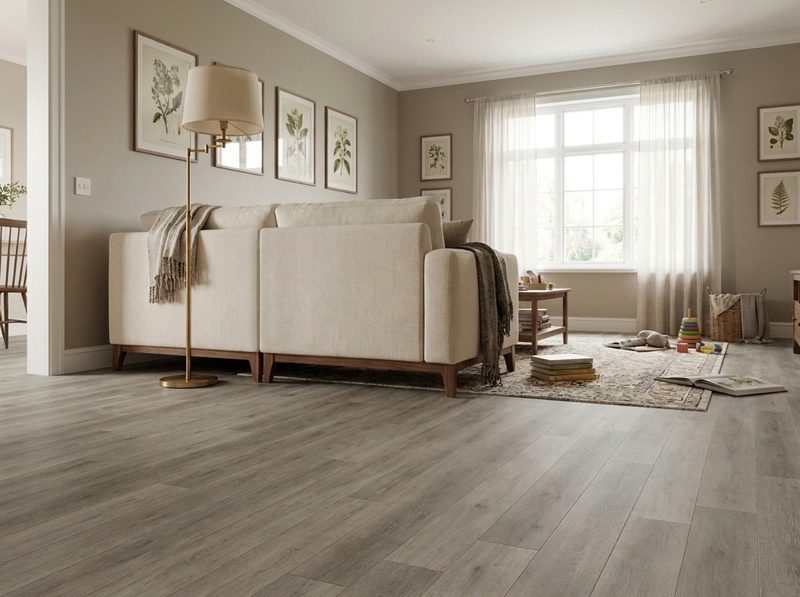
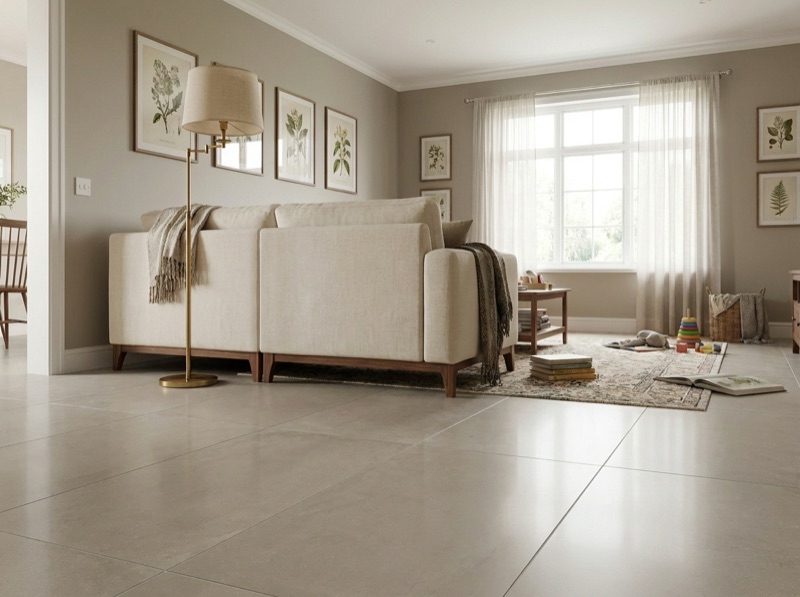

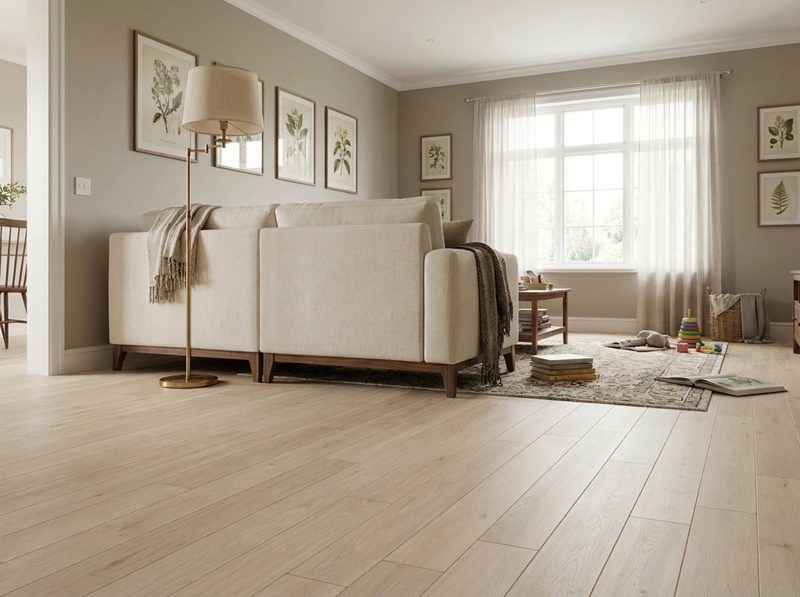
Why does flooring move with the seasons?
Flooring gains and loses moisture with the air around it, expanding a little in humid months and contracting a little in dry ones. That is normal and built into how a floor gets installed. The real decision is not whether it moves. It is whether the material was acclimated to your house first, and whether the install date lands on the humid side of the year or the dry side.
The decision is not whether it moves. It is what you do about it
Every floor we sell breathes with the room it is in, wood most visibly, but the field of any connected floor, tile grout included, is reacting to the same swings in temperature and humidity across the year. That part is not optional and it is not a defect to prevent. The decision actually in front of you is narrower than that: given that movement is coming either way, do you let the material settle into your house before it is installed, and does the calendar date you install on work for or against you.
Option one: install without worrying about timing
For most rooms, most of the time, this is fine. A house that stays conditioned year round keeps its swing small enough that a normally acclimated floor, installed with the room built in for it at the perimeter and at transitions, will not show the difference between a July install and a January one. This is the right option for a typical conditioned living space with no unusual humidity source nearby.
Option two: acclimate deliberately before you commit
Where the room runs warmer, drier, or damper than the rest of the house, a stretch of three season porch turned living space, a room over a garage, anywhere near a kitchen or bath that changes its own air, letting the actual material sit in that actual room before installation lets it arrive already close to where it will live rather than close to where the warehouse was. This is the option worth choosing whenever the room is not a typical conditioned space.
Option three: pick the install date on purpose
A floor installed with room to expand during a humid stretch can, later in a dry season, shrink back and leave a visible gap between boards that was never meant to be seen. A floor installed tight during a dry stretch can, later in a humid one, have nowhere to expand into and push against itself instead. Neither outcome ruins a floor by itself, both are why the perimeter and transition gaps exist in the first place, but a shoulder season install, avoiding the extremes of either end, is the option that asks the least of that built in room to move. It matters most for solid wood and least for a floating floor engineered specifically to absorb the swing.
HVAC, the room and your calendar are what pick it
Whether your HVAC runs year round without long gaps is the first thing that settles it, since a steady house makes the whole question smaller. What the room is and where it sits in the house is the second, since an addition, a sunroom, or a room over unconditioned space asks more of the floor than a bedroom in the middle of the house does. And how flexible your install date actually is comes third, because a fixed move in date can outrank a perfect shoulder season every time, and that is a fine trade as long as everyone involved knows it going in.
Bring a sample home before you commit
The single most useful thing you can do costs nothing extra: take the sample you are leaning toward and set it in the actual room, not on a showroom rack under different light and different air, for a few days before you sign off on it. Watch whether it cups, twists, or feels different once it has sat there. A board acclimating to a real room tells you more about what to expect than any spec sheet does. Our installation process already builds in a step where material lands before the crew starts, and hardwood may sit in the house first so it comes into balance with the indoor humidity it will live in, which is the same idea applied to the whole order rather than one plank. Bring us the room details and the sample you are considering at the free in-home measure, and we will tell you what that specific room is asking for. Call 636-332-0654.
What else people ask about seasonal movement
How much different materials move, what a winter gap actually means, and how long a sample needs to sit before it tells you anything.
636-332-0654No. Solid wood moves the most because it is a single piece of natural material reacting directly to humidity. Engineered wood, laminate and luxury vinyl plank are built to move less, and tile barely moves at all, though its grout lines still need room somewhere in the field.
Usually yes for solid hardwood, since heating season dries the indoor air and every board narrows a little across its width. Rather than repeat it here, the winter gapping page walks through how to tell a normal seasonal line from one that is not.
A few days gives you a fair read in most rooms, longer in an unusual space like a sunroom or a room over a garage. The point is watching it in your own light and air rather than the showroom's, not hitting an exact number of days.
Both matter. The install date gets set once your order is in, so the timing conversation is worth having when you pick the date rather than after. A fixed move in date can still outrank a perfect shoulder season, and that is a normal trade to make.
Bring the sample, we will read the room
Bring in the plank or tile you are considering, or take one home to sit in the actual room first. We measure the space and tell you what that room's conditions ask of it.
Free estimate
636-332-0654