 Flooring Correct
Large Format Or Standard,
And What The Floor
Underneath Can Take
A bigger tile is not simply a stylistic upgrade of a smaller one. It asks for a flatter and stiffer floor, it limits the patterns you can lay it in, and it cannot follow a slope toward a drain. Those constraints do more to settle the size question than the sample board does.
The tile pillar covers what porcelain, ceramic and stone are and what the numbers on the sample tag mean, and the sizes and formats entry sets out the shape families and what each one asks of a room. This page answers the narrower question that comes after both of them. The material is settled, porcelain is going down, and the only thing still open is the dimension. The short version is that the size gets decided by the room and by the floor under it rather than by the mood board, and there are rooms where a big tile is the wrong answer no matter how good it looks in a photograph. Call 636-332-0654 and we will start with what is under your floor.
What is actually left to decide once porcelain is settled
By the time the material is chosen, most of the arguments people expect to have are already over. Density, the wear rating and how a tile behaves in a wet room are properties of the tile rather than of its dimensions, and none of them move when the piece gets longer. What the dimension changes is narrower and more stubborn. It changes how many lines you look at, how the room gets cut at its edges, what the layout has to do to stay graceful, and how much correcting the floor underneath needs before anything is set.
That last one catches people out, and it is a real difference rather than a matter of degree. A large tile asks for a flatter and a stiffer floor than a small tile does, because each piece bridges more of whatever the floor is doing wrong, and the tolerance it calls for is set out on the tile page. Raise it before the size is chosen rather than after, because a floor that needs correcting is a step in the schedule and not an opinion anyone is going to talk you out of.
The other useful move is to run this room by room instead of house wide. A size that is obviously right in an open kitchen can be obviously wrong in the bath twenty feet down the hall, and there is nothing inconsistent about a house that answers the question twice.
Long tile limits the pattern you are allowed to lay it in
People often arrive wanting a brick pattern with each tile offset halfway along the one beside it. On a long tile that offset is held to roughly a third instead, because tile is fired with a slight crown along its length, and a half offset lands the high middle of one tile against the low corner of its neighbor. That is lippage by design, and the tighter offset avoids it. A stacked or straight lay is the other clean answer on a long tile, and it suits a modern room.
Smaller tile has no such restriction, which matters if the pattern is the point of the room. Herringbone, basketweave, a true half offset, a border around a hearth: each wants a piece you can lay in quantity without fighting geometry. If your pattern is not a straight lay, size is not the first decision to make.
Big tile makes the layout decisions earlier and with less mercy
Every tile floor starts from a chosen line and works outward, and getting that line wrong hurts more as the tile grows. A big tile in a small bath can leave a sliver against the tub and a full piece at the door, and the sliver is what you look at every time you stand at the sink. Islands, toe kicks, registers and door casings all take cuts out of the field.
In a room broken up by jogs, angles or a step down, a smaller tile absorbs all of it quietly. In a rectangular room with a clean run, a large tile has nothing to fight. Look at the shape of the room before the size, because the geometry decides how graceful the cuts will be.
Once the joints are few, the grout color is the floor
With a small tile the grout is one element among many, and a near miss on the color disappears into the pattern. With large format there are so few lines left that the color choice becomes structural to how the room reads. Matched, the floor is a single quiet plane. Contrasted at all, the handful of lines you have turn into a grid you had better have meant to draw. There is no neutral setting on that dial, and what the grout itself is made of is settled on the grout entry.
Where a change of size between rooms reads as a decision
A house does not have to run one size everywhere, and most do not. A change is legible at a doorway where the two rooms are already doing different jobs. A big field through the kitchen with something smaller in the bath off the hall reads as two decisions taken on purpose. The same change inside one open space, halfway along a sight line, reads as a repair.
A wet room next to a dry one is the clearest version of that. A floor that pitches toward a drain needs pieces small enough to turn with it, so the size changes at the threshold for a reason anybody can see, and running the big tile on the walls with a small companion on the floor is a normal pairing rather than a concession. What belongs on a shower floor is answered on its own page.
Where each size lands, room by room
Two things sit above the whole list. A floor that gets wet is chosen on the wet slip number on the tag before it is chosen on a dimension, and the slip rating entry covers what to look for. And a floor that flexes or will not sit flat gets corrected first, whatever size ends up going over it.
- Main bath floor with no drain in it: large format works, but only with a textured face and the wet slip number checked on the tag, matched grout, and the layout set so the sliver falls where the vanity hides it. If a child gets out of a tub onto it, a smaller tile with more joints is the safer call.
- Shower floor and any floor that slopes to a drain: small tile or mosaic, because the surface has to turn with the slope.
- Kitchen running into a dining area: large format for continuity, on a substrate that has been flattened for it first.
- Entry and mudroom: either size, chosen for the textured face and the wet slip number on the tag rather than for the dimensions.
- A room with jogs, angles or a step down: standard size, which cuts into the geometry with less waste and fewer awkward pieces.
- Laundry room with a floor drain: standard size around the fall, and a plan for getting the machines back in over the finished height.
When the size question is not the one to be answering
There is a case where the size question is beside the point. If the subfloor will not carry tile without flattening work you would rather not take on in time or disruption, or if the finished height will not clear the appliances and the doors, that settles the specification before size enters it, and luxury vinyl plank or sheet vinyl is the honest suggestion. We would rather say that at the measure than sell a size the floor cannot carry. The comparison index covers the material decisions that sit next to this one.
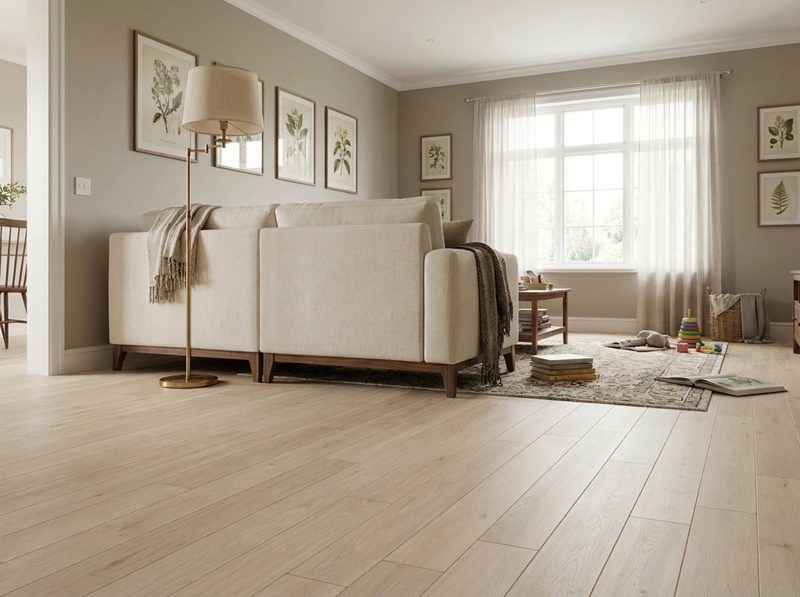
There is also the case where the answer is a shape rather than a size. A long plank porcelain counts as large format by dimension, so it inherits the flatness requirement and the offset limit above. Whether it beats a vinyl plank in the same room is a separate question, worked through on wood look tile against luxury vinyl plank.
What gets checked before a size is ordered
Tile is the material where the floor gets inspected before the sample book comes out. Flatness across the room, how the floor behaves when someone walks it, where the drains and the falls are, what the finished height does to the doors, and whether the existing floor comes up or gets covered. Book the in-home measure for that, then see the sizes with the grout colors beside them at the showroom.
“The job was done quickly and done very well- thanks Randy. ... All in all, it was a good experience with Flooring Correct. I would recommend them to anyone”
What gets asked once the sizes are on the floor together
These come up with two sizes side by side and the grout colors beside them, which is when the size question gets real.
636-332-0654Usually yes, and the reason is the joint count rather than the tile. Fewer lines give the eye less to stop on, so the floor reads as one surface instead of a grid. The gain depends on the layout, though. A big tile that leaves a thin sliver along the tub can undo the effect, so where the first line goes matters as much as the size you picked.
Often you can on the walls and cannot on the floor. A floor that pitches toward a drain wants pieces small enough to turn with it, which is a different format from the one you fell for on the wall. Running the big tile above with a small companion below is a normal, deliberate pairing rather than a compromise, and the shower floor question has a page of its own.
It is the requirement for the size you picked. Large format calls for a flatter substrate than a small tile does, and a tile bridging a hump shows lippage at the edges or cracks later. The tolerance itself is spelled out on the tile page. If you would rather not do the flattening, that is a real reason to choose a smaller tile instead.
Less joint means less to clean and to reseal, and that part is genuine. What people underestimate is the other side of it. The few joints you have are long, straight and unmissable, so the color and any variation in the width show up in a way they never would in a small tile field. Settle that with the tile rather than on setting day.
The offset gets held to roughly a third rather than a half. Tile is fired with a slight crown along its length, and a half offset lands the crown of one tile against the low corner of the next, which produces lippage. A straight or stacked lay is the other clean option on long tile.
Ask what you want the room to be. A big square reads as a continuous stone or concrete surface. A long plank reads as a wood floor and runs the direction of the room. Both carry the same flatness and offset rules, so this one really is about the look.
A tile size gets chosen after the floor is checked for flex and fall
Where the floor moves, where it slopes toward a drain, how flat it reads across the room and what the finished height does to your doors are all findings from the room itself. The free in-home measure produces them, and then the size is obvious. Call 636-332-0654.
Free estimate
636-332-0654