 Flooring Correct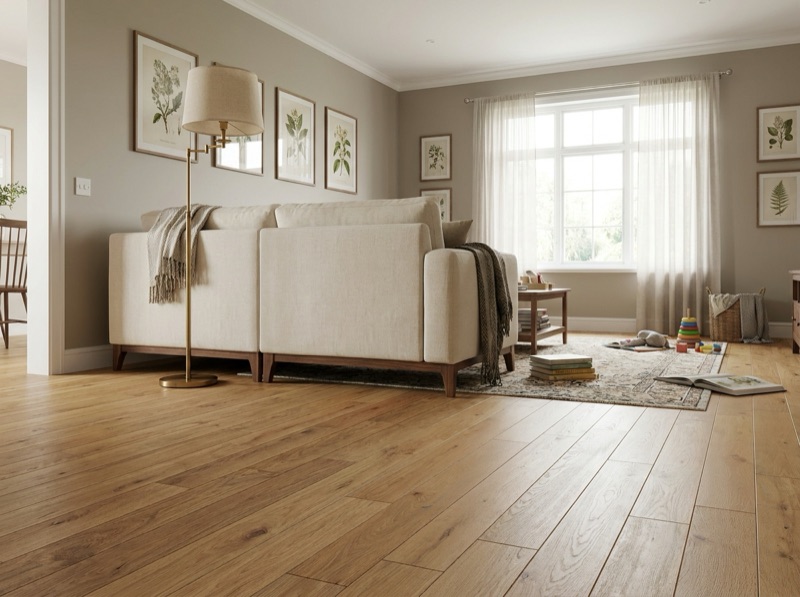
Can you put hardwood in a kitchen?
Yes, with conditions. Wood goes into kitchens all the time and looks superb doing it. It is not waterproof, though, and the risk here is not the spill you see, it is the one that runs under a dishwasher for a month. If you want wood in this room, the trade is attention: wipe things up, watch the appliances, and accept that a bad leak means a repair.
Straight to the wood part
If you are still choosing between materials, the queue for this room is sorted on our kitchen flooring guide. This page assumes the floor you want is wood, because plenty of people want exactly that and deserve the specifics rather than a shrug. The answer is a qualified yes, and the qualifications are the useful part.
What water actually does to a board
A finish is a film on the top face of a plank. It is not an envelope. The edges of every board, the tongue and groove joint and the end joints carry no coating at all, which makes the seams the way in. Water sitting on the surface long enough to reach a seam wicks into the edge of the wood, and wood takes on moisture eagerly.
Then it swells, across the grain rather than along the board. A plank wetted at its edges swells there first, the edges rise above the center, and that is cupping. Caught early and dried out evenly, a cupped floor often relaxes back on its own. Left wet long enough, the swollen edges crush against each other, and when the board finally dries those same edges sit below the center and the floor needs sanding flat. Same physics as the thin gaps that open in winter, only concentrated and much faster.
The sink is not the problem, the appliances are
Splashing at a sink is a surface event and a towel deals with it. What ends wood floors in kitchens arrives from below and out of sight: a supply line weeping behind a dishwasher, a drip off an ice maker feed, a disposal joint seeping into the cabinet base. That water reaches the underside of the floor, where there is no finish whatsoever, and it stays. By the time the nearest boards darken or the finish goes cloudy, it has been going on a while.
So the practical advice for wood in a kitchen is mostly about the appliances rather than the mopping. Know where the shutoffs are, and look behind and underneath things now and then instead of waiting for a symptom to show up in the floor. A mat at the sink helps if it gets picked up and dried, and works against you if it is left down over boards that never get to dry.
Where the risk actually sits in the room
Not every square foot of a kitchen is a wet zone. The sink run, the dishwasher bay and the refrigerator are the exposed ones. The rest is circulation, which wood handles as well as it handles a hallway. So the shape of your kitchen changes the answer more than the material does. A large open kitchen where the wet work happens along one wall is a far better candidate than a tight galley where every board is within reach of a sink or an appliance.
Engineered or solid in this room
Engineered is the more comfortable construction here, for a reason that has nothing to do with waterproofing. Its cross laminated core resists dimensional change, so it takes a humidity swing better and holds a wide plank flatter, and over a slab it is the only wood answer there is.
What it is not is more waterproof at the surface. The top is real sawn wood, the seams are still seams, and standing water at a joint behaves the same on either construction. Where solid answers back is repair. A full thickness solid floor carries enough wood above the tongue for several sandings across its life, while an engineered floor has only its wear layer, and how thick that layer is decides whether it can be sanded at all. In the room most likely to need a repair one day, that is not a small point. The two are compared in full on solid versus engineered.
Finish, sheen and the bevel
The finish decision carries more weight in a kitchen than in any other wood room. A prefinished floor arrives with a hard factory cured coating and a small bevel milled at each board edge. That bevel is a shallow valley running along every seam, and in a kitchen a valley is where a drip sits instead of being wiped up. A site finished floor is sanded and coated in the house, so the coating flows across the joints and leaves a flat unbroken plane with nowhere for water to sit. That is a genuine advantage here, paid for in dust, odor and cure time.
Sheen does the daily work, and the hardwood page carries the full menu of species and finishes. The short version for a kitchen is that a low sheen and a textured surface hide water spotting and crumbs, and a glossy floor puts both on display under the same lights.
The repair you may eventually make
Here is what genuinely separates wood from every alternative in this room: it is the only floor in the conversation that can be brought back rather than replaced. A damaged board can be cut out and a new one woven in. A whole floor can be sanded and recoated. Nothing with a printed wear layer does either.
The kitchen complicates it. The floor usually runs up to fitted cabinets and around a dishwasher recess, so a damaged board mid run has to be replaced in place, and a refinish means the room is out of use while it happens and the floor has to be clear. How that would be sequenced in your kitchen, and what a given job covers, is settled at the free in-home measure rather than guessed at on a web page.
What you are trading
Plainly: you are trading certainty for character and repairability, and taking on a watching job in exchange. What you get is the one surface in the room that is actual wood, that can be refinished when it looks tired, and that stays repairable a long way into the future. It works in households that notice a leak early and do not mind the attention. If the kitchen is busy, the sink is never dry and problems tend to get found late, the materials at the front of the kitchen queue will serve you better, and we will say so rather than sell you the floor you walked in asking for.
To see how it reads against your own cabinets, bring a cabinet door and a photo of the room to the Wentzville showroom at 15570 Veterans Memorial Pkwy, then take the shortlist home and leave it on the kitchen floor for a day. Call 636-332-0654.
What else people ask about wood in a kitchen
Engineered and water, the early warning signs of a leak, and matching the rest of the house.
636-332-0654No. Engineered construction solves for humidity and dimensional stability, not for standing water. The top of the plank is genuine sawn hardwood and the seams between boards are still open edges, so water left sitting at a joint behaves the same way it would on a solid floor. If waterproof is the requirement, the kitchen guide points at the materials that genuinely are.
Usually the boards themselves, before anybody finds the plumbing. Look for cupping where board edges sit higher than their centers, a darkened line of planks near an appliance, a finish that has gone cloudy or milky in one area, or a board that sounds hollow underfoot when the ones around it do not. Any of those means water has been present for a while and the source is worth finding immediately.
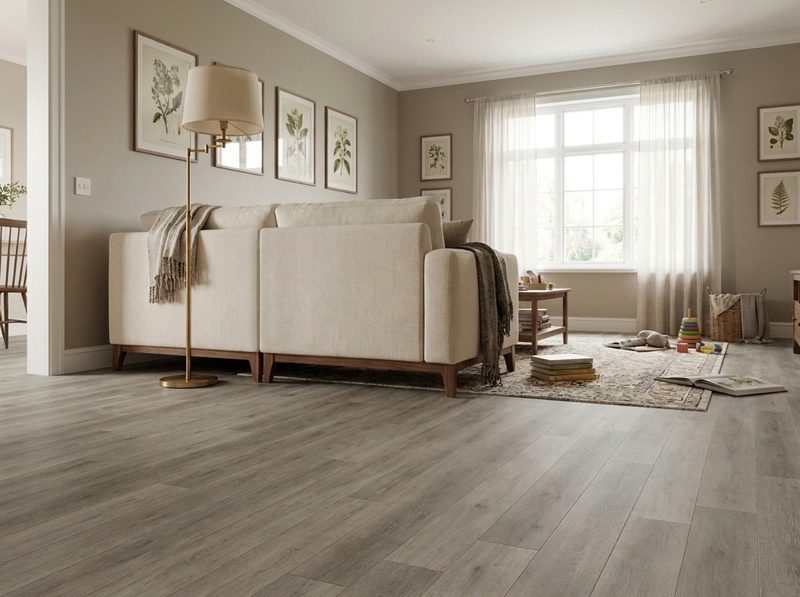
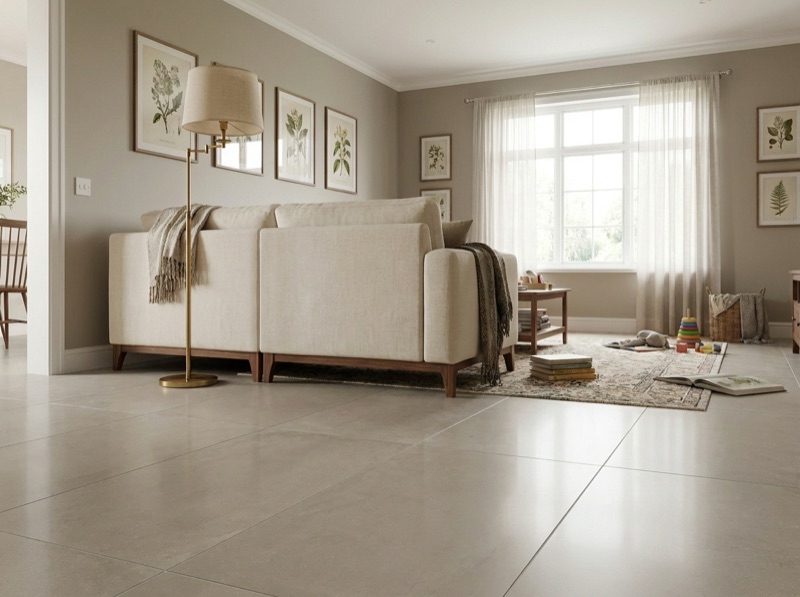
Visually it usually should, and there are two honest ways to get there. Run the same wood through and accept the trade this page describes, or use a wood look material in the kitchen and change floors at the doorway, which needs a threshold and a planned direction change to look deliberate. Which one suits depends on whether the kitchen is open to the next room or closes off from it.
Talk it through before you commit
Tell us about the kitchen and how it is used. We measure in your home, look at the appliance bays and cabinet edges, and say honestly whether wood belongs in it.
Free estimate
636-332-0654