 Flooring Correct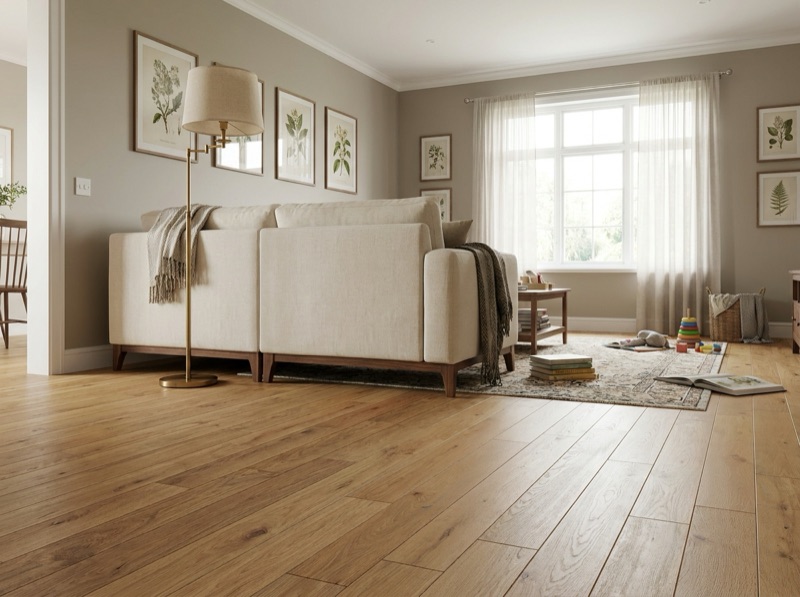
What flooring handles Missouri humidity swings best?
It is a trade, not a single winner. Rigid vinyl and tile gain the most stability across a humid summer and a furnace-dry winter, but give up the authentic wood feel. Solid hardwood gives the most of that feel and refinishing life, but gives up the most stability. Engineered hardwood splits the difference. Which one wins depends on the room, not the category alone.
The question is not which floor is immune to humidity. Nothing entirely is. The real question is what you are willing to trade for stability, and what you are willing to trade for the look and feel that stability usually costs.
The trade, stated plainly
Every material on this list sits somewhere on the same line. On one end, stability across a wide seasonal swing. On the other, the warmth, authenticity and refinishing life of real wood. Nothing gets both at the top of the range. Our page on hardwood specifically settles the yes-or-no question for that one material, so this page is the wider view across every category, and where each one actually wins a room. The part worth adding up front is that a house does not swing evenly. A sunroom, a three-season addition or a room with a wall of west-facing glass runs much closer to outside conditions than a bedroom sitting in the middle of a conditioned floor, so the material that is right in one room can be the wrong call two doors away. The indoor range worth aiming at has a page of its own.
Rigid vinyl and tile: the most stability, the least wood feel
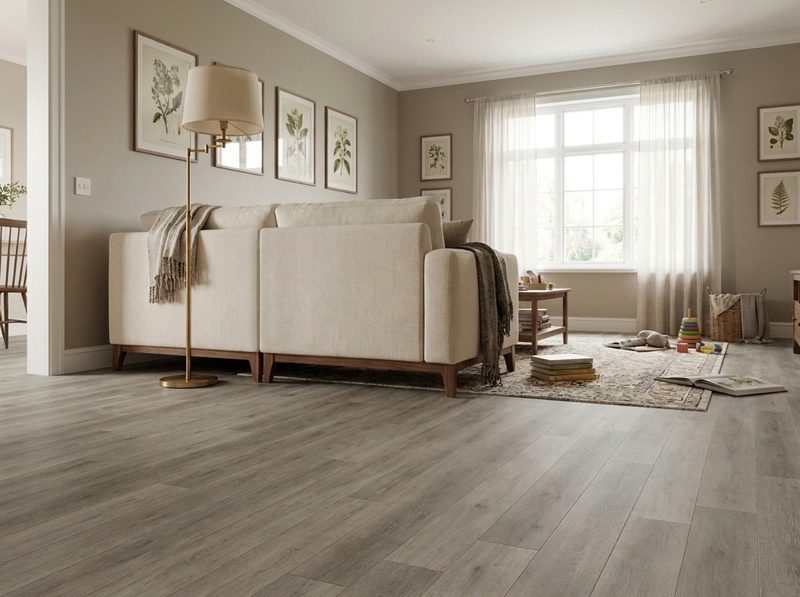
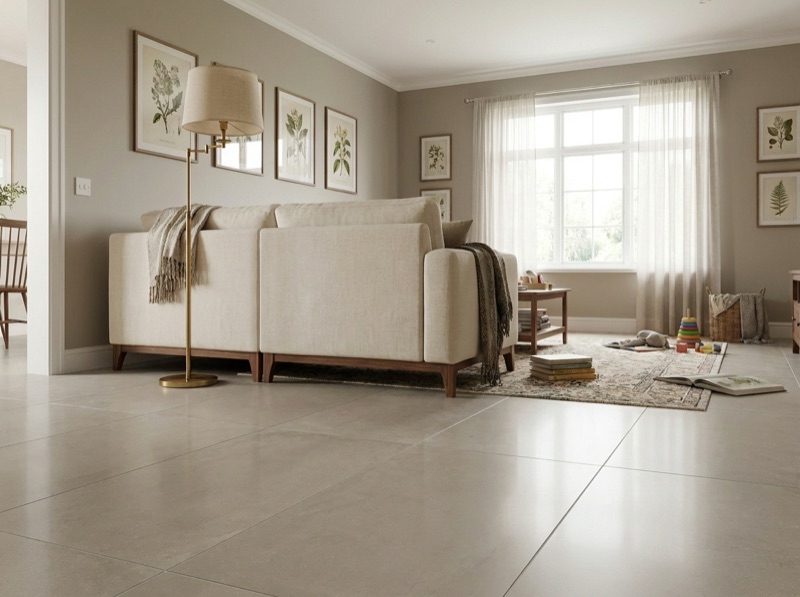
Rigid-core luxury vinyl plank and tile sit at the stable end. Neither is meaningfully reactive to the humidity swing this climate produces, which means the seasonal gapping, cupping and movement that wood-family floors have to manage are simply not part of the equation. What you give up is the material itself. Vinyl is a manufactured product designed to resemble wood or stone rather than being either one, and tile is hard and cold underfoot in a way that some rooms are built around and others are not. For a room with heavy exposure to swing, a sunroom, a room over a slab, an add-on with less consistent conditioning, this is where the safest number of unknowns sits.
Engineered hardwood: real wood, with the swing narrowed
Engineered hardwood is genuinely real wood on the surface, wearing and aging the way solid wood does, built on a cross-layered core that resists the swelling and shrinking a solid board goes through. It moves less than solid hardwood across the same swing, which is what makes it a common answer in a house that wants a wood floor without asking every room to be perfectly conditioned all year. The trade is that it is not the same board as solid hardwood, and its refinishing life is more limited over the life of the floor, since the visible wood layer is thinner than a solid board's full thickness.
Solid hardwood: the most authentic, the least forgiving
Solid hardwood gives you the most of what people actually want from wood, a full-thickness board that can be refinished multiple times over a long life. It is also the material that moves the most across a Missouri summer-to-winter swing, which is the cost of that thickness rather than a flaw in it. What the house has to hold up its end of, and where a solid board is and is not the right specification here, is set out in full on the hardwood page. For the purposes of this comparison, solid sits at the far end of the line: the most authentic surface and the longest refinishing life, bought with the least room for the house to drift before the floor starts telling you about it. That is a real trade, not a warning, and in the right room it is the one worth taking.
The mistake this whole trade is meant to prevent
The mistake is not picking the wrong material category. It is picking one material and running it through every room in the house without asking whether each room actually experiences the same swing. A solid hardwood that is genuinely fine in a steadily conditioned living room can be a poor bet in a sunroom or a room over a slab with a very different moisture story, and the reverse is just as true, rigid vinyl chosen everywhere out of caution when a steadier room could have carried real wood without issue. Matching the material to the specific room is what this whole page is arguing for, not a single answer for the house.
Get it matched room by room, not guessed at once
The free in-home measure is where this actually gets decided, room by room rather than as one blanket call for the house. Tell us which rooms get the most sun, which ones run closer to outside conditions, and where you most want the real-wood look even if it means a little more attention to how the room stays conditioned. Call 636-332-0654 to get started.
What else people ask about humidity and flooring
How stable vinyl really is, mixing materials room to room, and whether a steady thermostat actually helps.
636-332-0654Close to it, for practical purposes. Rigid-core LVP is not meaningfully reactive to the humidity swing between a Missouri summer and winter, which is why it shows up so often as the safe default in rooms with heavier exposure. It is still a manufactured product, not real wood, which is the actual trade rather than any real durability concern.
Yes, and that is often the right call rather than a compromise. Running solid hardwood in a steadily conditioned living or dining room while choosing engineered wood, vinyl or tile in a sunroom, a basement or a room over a slab matches each material to what that specific room's swing actually looks like.
It matters more than people expect. The swing that stresses a wood floor is driven largely by how far indoor conditions drift between seasons, not by the outdoor climate alone. A house that holds a steadier indoor humidity year round asks less of every wood-family floor in it, regardless of which one you choose.
Avoid the one-size mistake
Tell us which rooms get the most sun and the least conditioning. We match materials room by room instead of guessing once for the whole house.
Free estimate
636-332-0654