 Flooring Correct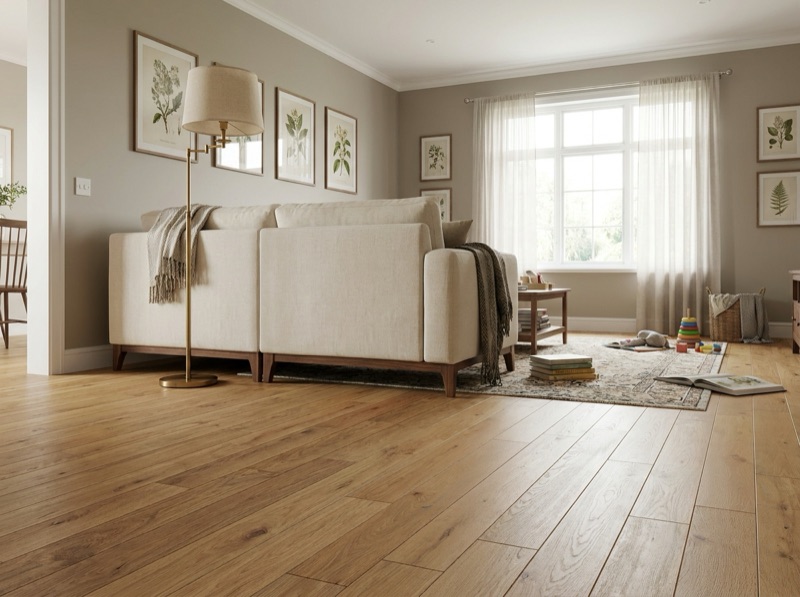
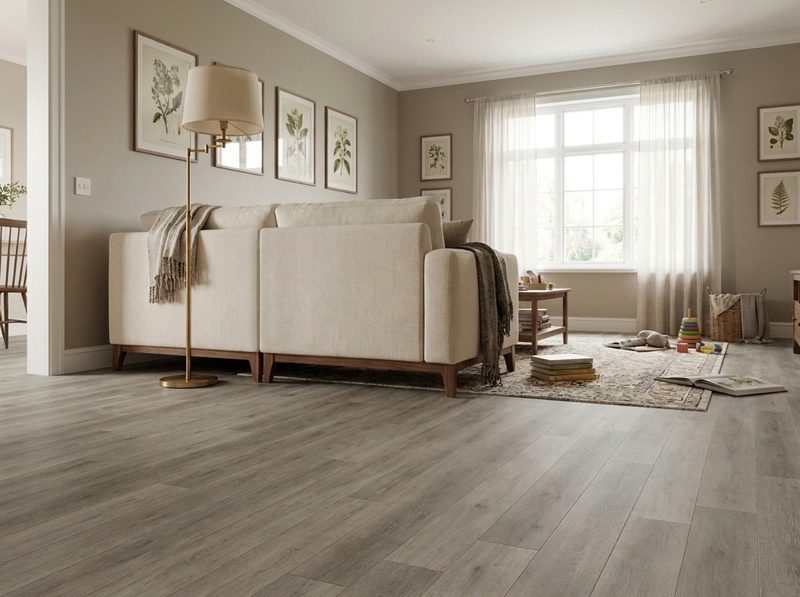
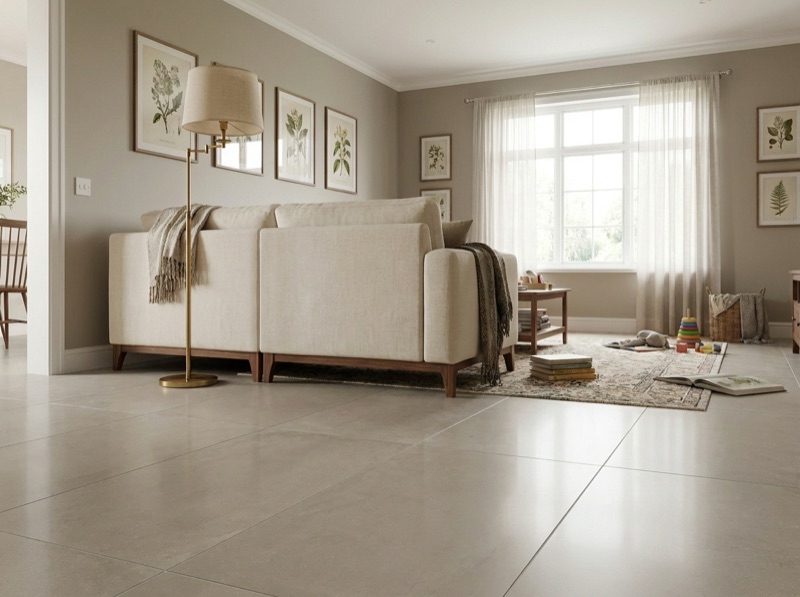
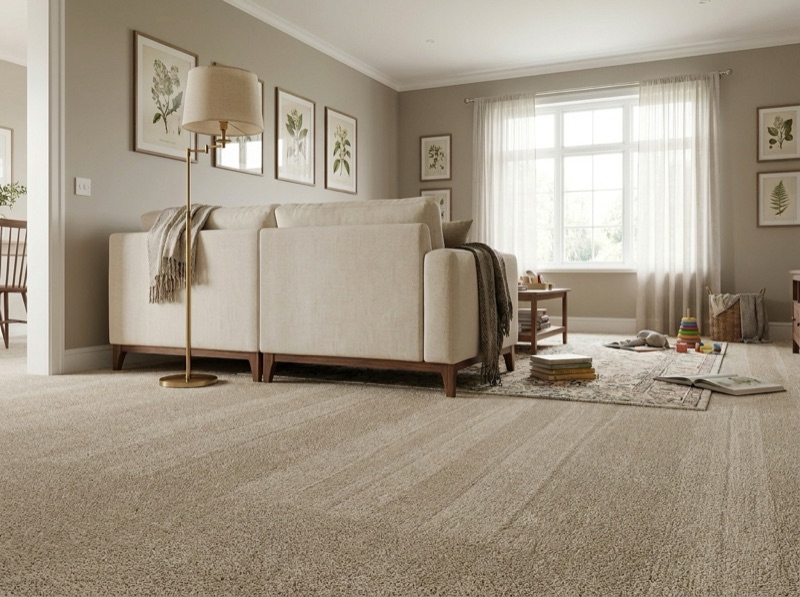
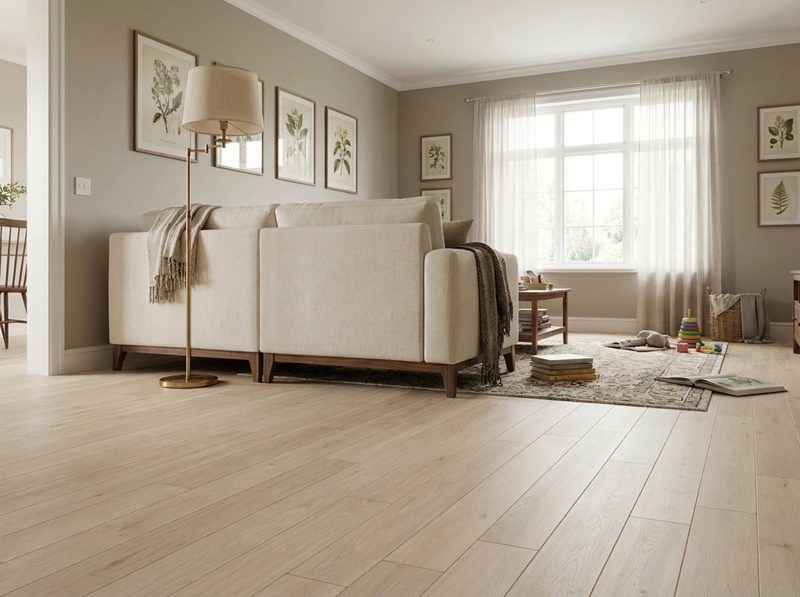
What does the showroom have that websites do not?
Scale, sheen and texture, which are the three things a photograph cannot carry. On a screen you see one cropped board, lit by a photographer and rendered by whatever your display is set to. On a rack you see a full plank, tilt it into the light, feel the emboss, and compare two finalists side by side under one light.
Browsing online first is sensible and most people do it, ourselves included. The useful thing is knowing exactly where a screen stops being able to help, so you know what you are actually walking in to do. Follow one plank through the sequence and the gap shows up in a specific order.
Start with what a product photograph really is
It is one board, or a small arrangement of boards, cropped tight, lit by someone whose job was to make it look its best, color managed through a workflow you cannot see, and then rendered by a display set to a brightness and a white point nobody calibrated. Two screens in the same house disagree about the same image. None of that is dishonest and none of it can be fixed by looking harder. It is simply the ceiling of what a picture of a floor can tell you.
So the sequence below is not the showroom being better than the internet. It is a list of the properties that stop existing the moment a floor becomes an image.
First: scale, at the size the floor will actually be
A photo of a plank is a swatch. A floor is a field. The thing that separates them is repeat. Printed floors carry a limited number of unique board faces, and the pattern cycles across a room whether you notice or not. On a rack you can stand back from a full display and find out how quickly the same knot, the same streak or the same tile face comes around again. In a big open plan that matters much more than the color chip does, and it is invisible in every product photograph ever taken.
Plank width does the same trick. A wide board photographs like a narrow one and lives in a room completely differently, which is worth thinking about before you commit.
Second: sheen, under a light you can move
Gloss is not a color, it is a behavior. It depends on the angle between the light, the surface and your eye, and a photograph fixes that angle once, permanently, at whatever the photographer chose. Pick a sample up and tilt it toward a window and the sheen comes up or it does not. That is your answer about whether the floor will show every footprint and every streak of the mop when a low winter sun comes in across it.
Sheen is angle-dependent by definition, and a photograph fixes that angle once, so it is the property most easily misjudged from a screen. There is no version of looking harder at the image that recovers it. <a href="/answers/how-does-flooring-affect-home-lighting/">How a floor and a room's light work on each other</a> goes further into it.
Third: texture and the edge, which your fingertips read faster
Run a hand across a sample and you learn things your eyes take much longer to get to. How deep the emboss is. Whether the texture lines up with the printed grain or simply runs across it, which is what separates a convincing wood look from a busy one. Whether a stone look tile has any tooth or is glass smooth, which is a real question in an entry or a bathroom.
Then look at the edge. The bevel at the plank edge decides how strongly the finished floor reads as separate boards, and a deep bevel on a wide plank is a completely different floor than the photo suggested. Same for a grout joint on tile, where the joint width and the grout color change the room more than the tile does.
Fourth: the back of the sample
A screen shows you one face. Turn the sample over and you find the construction: the core, whether a cushion or pad is attached, how the thickness feels between your fingers, how the locking edge is cut. Those are the things that decide how the floor sounds underfoot and what has to go under it, which is why the underlayment question gets settled at the rack rather than at the checkout.
Two finalists, side by side, under one light
Everything above is preparation for one moment: two finalists, at full size, side by side, under one light. Online you compare one at a time, each photographed by different people in different studios, and your memory of the first one is already wrong by the time the second loads. Set two real samples next to each other and one of them usually loses on the spot, and often it is the one that was winning on the screen.
From there, the samples go home with you, because a plank under store lighting is not the same plank under your windows. The showroom page covers what is on the floor at 15570 Veterans Memorial Pkwy, and taking samples home has its own answer. The other thing a website does not have is a person who installs what they sell standing on the other side of the counter, which is worth knowing before you arrive. Come and handle the product, then call 636-332-0654 when the list is down to two.
What people ask about choosing online
Visualizers, why store light lies a little, and whether the visit can be skipped.
636-332-0654Treat it as a mood tool rather than a decision tool. It is genuinely useful for ruling out a direction, seeing whether you want light or dark, warm or cool. What it cannot do is show sheen behavior, texture depth, plank scale or how the pattern repeats across a real room, and those are the properties people end up living with.
Because store lighting is a fixed, even, usually cool light chosen so product reads clearly, and your house is nothing like that. Window direction, bulb color, wall paint and the cabinets bouncing light back all shift what you see. It is the whole reason samples go home rather than getting decided at the rack.
You can start on the phone, and for narrowing categories it works well. The selection step still needs your hands and your own light at some point, because color and sheen are the two things that surprise people after a floor is down. If a trip out is genuinely difficult, say so when you call 636-332-0654 and we will work out the order to do things in.
Get it down to two
A shortlist of two materials is the point where a measure earns its keep. Tell us which two you are between and which rooms they are for, and we will hold both up against the subfloor, the doorways and the light you actually have.
Free estimate
636-332-0654