 Flooring Correct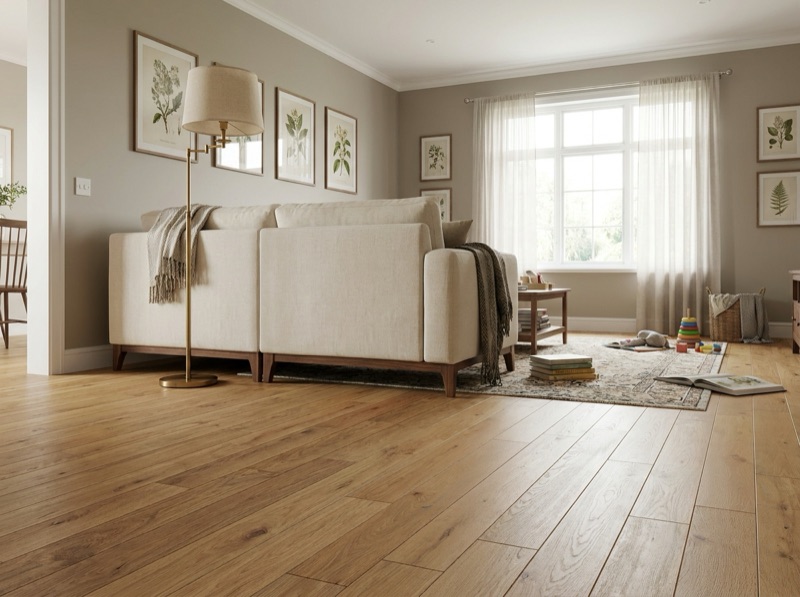
Do you help with color and design choices?
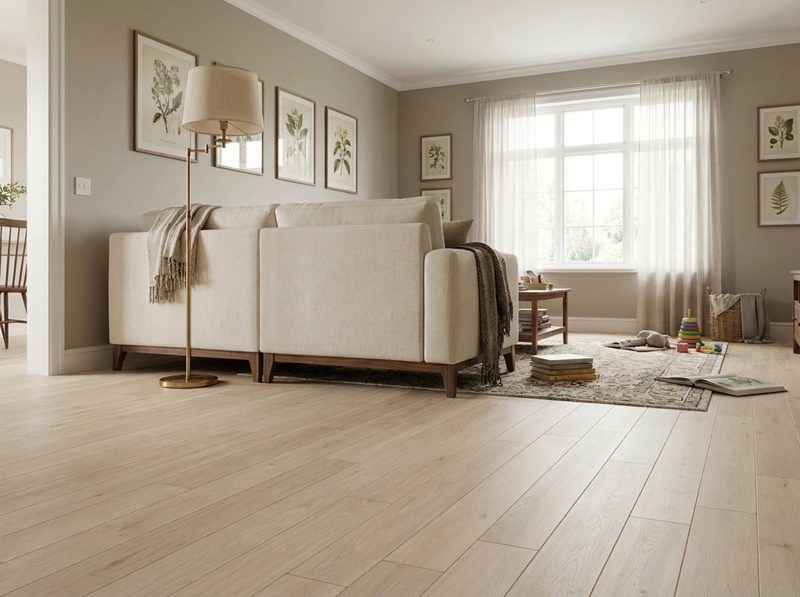
Yes. Narrowing color is most of what happens across the sample rack. The order matters more than taste: name what stays in the room first, settle the material second, then work color from the widest range down to two finalists, and judge those two at home against your cabinets, trim and light rather than under showroom lighting.
Yes, and it is most of the conversation. Choosing a color is not a moment of taste at the end of a flooring project, it is a sequence, and running the steps out of order is what makes the choice feel impossible.
First, list what is not changing
Before a single sample comes off the rack, the room needs its constraints written down. Kitchen cabinets. Door and window trim, and whether it is painted or stained. Interior doors. The stair parts you are keeping. A brick or stone fireplace. The counter surface. Any floor in an adjoining room that is staying put. That list is the whole problem, because a floor is never judged on its own, only against the things it touches.
This is also the step homeowners skip. People arrive with a color in mind from a photograph, which is a color that worked against somebody else's cabinets in somebody else's light. Bring a cabinet door, a drawer front or a paint chip with you and the field halves before anyone has said anything clever.
Second, settle the material before the color
Color choices are trapped inside a material. A tone you love may exist in laminate and not in the tile a wet room actually needs, and falling for it first means either a compromise you resent or a product in the wrong room. So the room decides the material, then the material offers you its range. The floor finder walks that decision in seven questions if you want a shortlist before you drive out, and the room pages take it further for a kitchen or a basement on a slab.
Third, undertone, and this is the step that decides the outcome
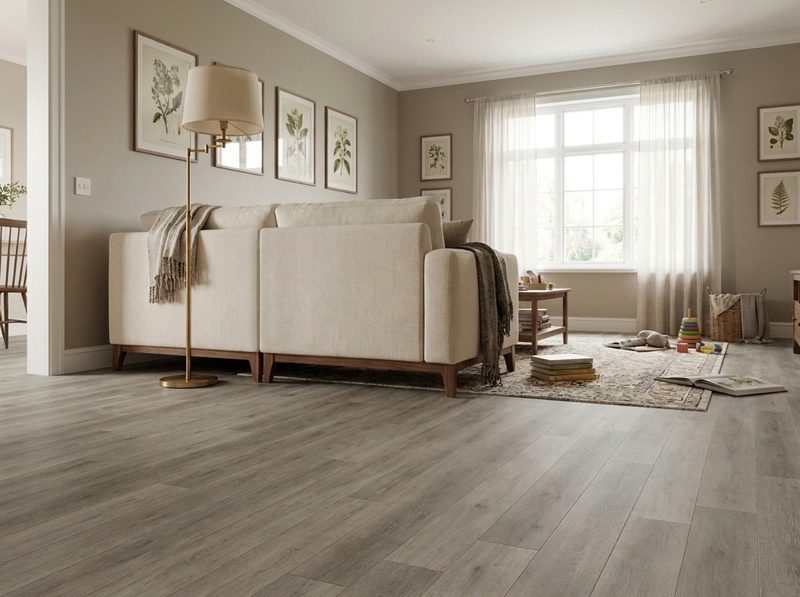
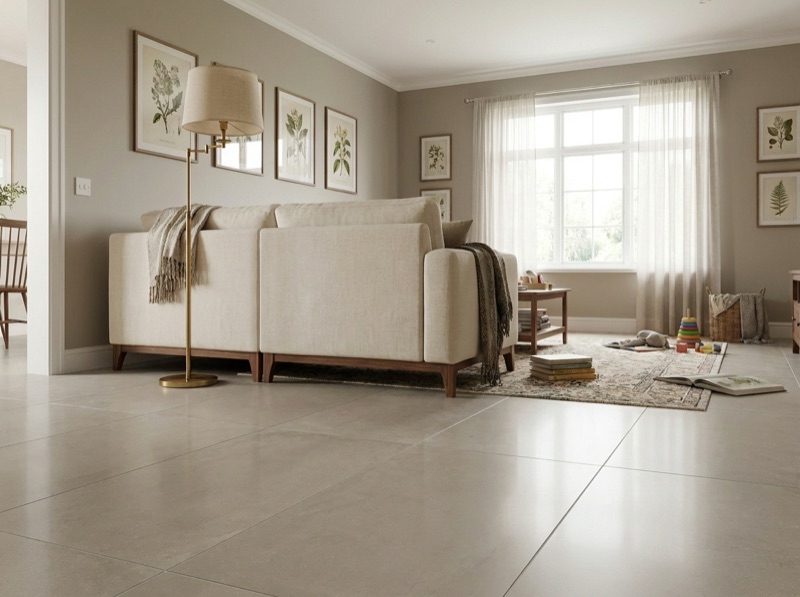
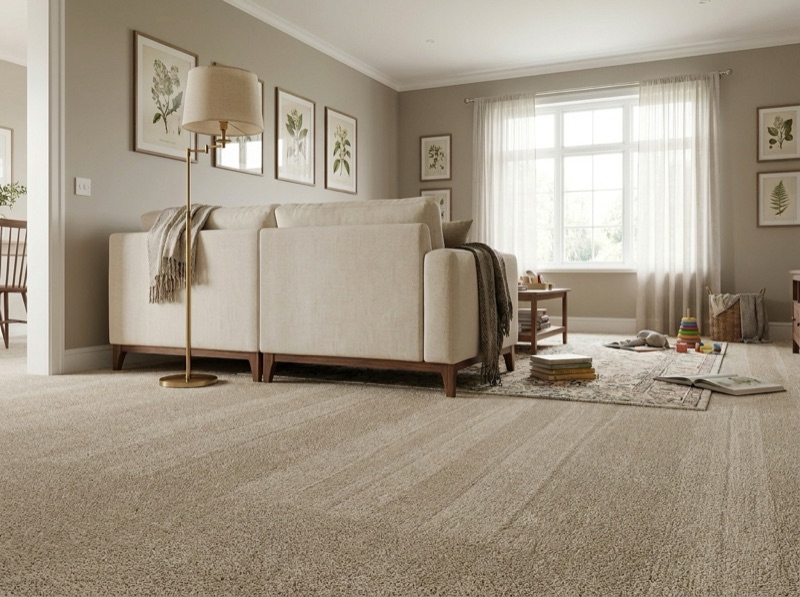
Every neutral has a bias. A gray leans blue or it leans brown. A beige leans pink, yellow or green. A white oak finish leans golden or it leans smoky. Almost nobody names the bias out loud, and almost everybody feels it when it is wrong, which is why an unhappy floor usually gets described as looking odd rather than looking blue.
So this is where the work happens. Lay the sample flat against the fixed surface, edge to edge, and look at the join. Two warm things that are warm in different directions clash harder than a warm thing next to a cool one. Do it in daylight, then again under the lamps you actually live with. Which side of neutral to land on next to cabinetry is a question with an answer of its own, and oak cabinets in particular come up here constantly.
Fourth, the things that only read at room size
Once undertone is settled, the remaining choices are about scale rather than color. Plank width changes how long a room feels and how often you see a seam, which the plank width entry explains. Tile format does the same for a floor laid in a grid. Sheen decides how much of your window ends up reflected back at you in the afternoon. Graining and variation decide whether the floor reads as a quiet background or as a feature, and a high variation product looks completely different across a room than it does in your hand.
This is the stage where a chip stops being enough and a full plank or a display run starts to matter. It is also where the question of what makes a room look bigger gets a real answer rather than a rule of thumb.
Fifth, two finalists go home with you
No color decision should be made under showroom lighting, and the showroom page is blunt about that. Two samples, laid where the floor is going, seen across a whole day. Anything more than two and the comparison turns into a shuffle.
Last, the joins get settled at your house
The final design decision is not a color at all, it is where the new floor meets the old one, the tile in the bath, the carpet on the stair, the step down into a sunroom. Two materials of different thickness have to meet somewhere and that meeting is either designed or accidental. Transitions and moldings is the vocabulary for it, and the free in-home measure is where each one gets decided with a sample in each hand, standing in the doorway. Call 636-332-0654 when you are down to two and we will come out.
What people ask before they commit to a color
Arriving undecided, two people who disagree, and matching a floor that is staying.
636-332-0654Not remotely. Arriving with a room, a description of who lives on it and a photograph of what is in there now is plenty. Most people think they need to see everything and end up leaving with a handful of samples and a reason for each. Knowing what you dislike narrows a field just as fast as knowing what you like.
It is normal, and samples are how it gets resolved without anybody winning an argument in a store. Take both contenders home, lay them where the floor is going and look at them at different times of day. Disagreements about flooring color usually turn out to be disagreements about undertone or sheen, and both become obvious once the samples are on your own floor.
That is a common request and it is worth being honest about. An exact match to an existing floor is rarely achievable, because the old one has aged, ambered and worn. The realistic aims are a deliberate contrast or a clean separation at the doorway, and bringing a photograph of the existing floor plus a spare board if you have one makes that conversation much shorter.
Narrow it to two, then we measure
Tell us the rooms, what is staying in them and who lives on the floor. We settle the material first, then the color range, then send you home with two samples and come out to measure once one of them has won.
Free estimate
636-332-0654