 Flooring Correct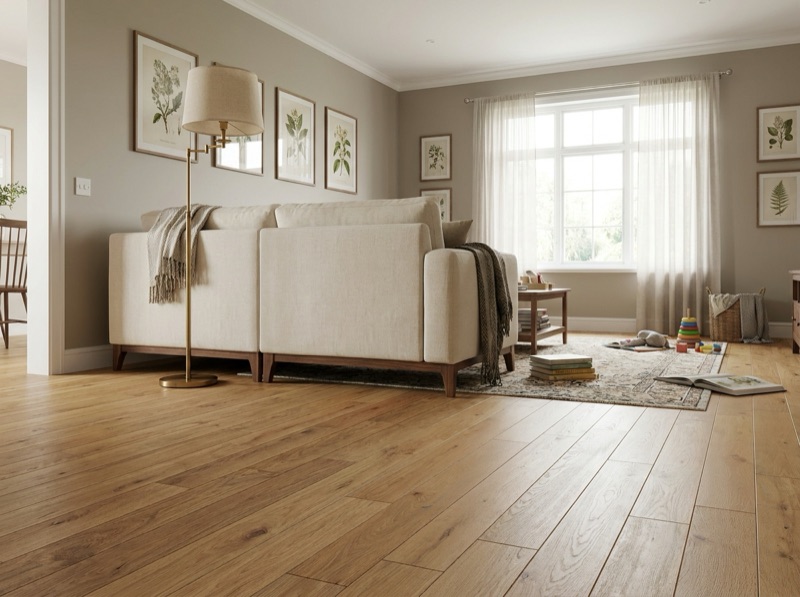
Flooring for
Manchester,
Missouri
A city built almost all at once. Roughly three in four Manchester houses went up across three consecutive decades, so a flooring question here tends to arrive for whole streets around the same time.
Manchester sits 28.8 road miles from Flooring Correct, about a thirty eight minute drive, in St. Louis County along the Manchester Road corridor, the same stretch of Route 100 that runs through neighboring Ballwin and Ellisville. What sets Manchester apart from those two cities is not the road they share, it is how uniform the housing behind it turns out to be. Call 636-332-0654.
One road, three cities, one different story
Manchester Road ties this whole stretch of St. Louis County together, and we already work Ballwin and Ellisville along the same corridor. Manchester itself, though, is the most uniform city on our map rather than simply another stop on the same road, and that is worth explaining on its own terms.
Built within one generation, almost to the year
The U.S. Census Bureau American Community Survey five year estimates for 2020 to 2024 put Manchester's median year built at 1977, across 7,423 housing units. The concentration by decade is the real story: 40.8 percent of the city's housing went up in the 1970s alone, the most concentrated single decade on our map after Dardenne Prairie's 50.3 percent. The neighboring decades only reinforce the pattern: 21.6 percent of Manchester's housing dates to the 1980s and 16.5 percent to the 1960s, three consecutive decades that between them account for most of the city.
Compare that with Ballwin, which spreads unevenly across six decades with no single one dominating. Manchester is the opposite kind of interesting: instead of a wide range of ages mixed block by block, most of the city arrived within one thirty year window. That means a flooring issue that shows up in one house on a street was very often installed at close to the same time as the flooring next door, and is likely to need attention on a similar timeline.
What that uniformity means for your project
A house from the 1960s, 1970s or 1980s in this part of the county typically carries the same construction habits as its neighbors: original subfloors from before materials standardized, and often two or three coverings layered on top of each other by now. The measure here is genuinely diagnostic for reasons close to what an older Ballwin house presents, plank subfloors, decades of settling, and thresholds that have shifted with the house. What is different in Manchester is that we are not guessing across a wide spread of ages house to house. If a neighbor's floor was original to a mid-1970s build, yours very likely was too.
The practical upside is that what turns up in one Manchester house is useful context for the next one on the block, without ever claiming to have worked on it. Single unit detached houses make up 72.6 percent of the city and 75.0 percent of occupied units are owner occupied, so this is largely a city of individual owners maintaining houses that all reached the current age at roughly the same time.
A city with its own civic marker
Manchester was first incorporated as a village in 1950 and reincorporated as a fourth-class city in 1959. The 2020 census recorded 18,333 residents across 5.03 square miles. Its clearest landmark predates the housing boom by decades: The Lyceum, built in 1894, was later restored and became Manchester's City Hall, and was listed on the National Register of Historic Places in 1979. It is a thread of nineteenth century Manchester running through a city otherwise defined by its mid-century houses.
What Manchester houses tend to need
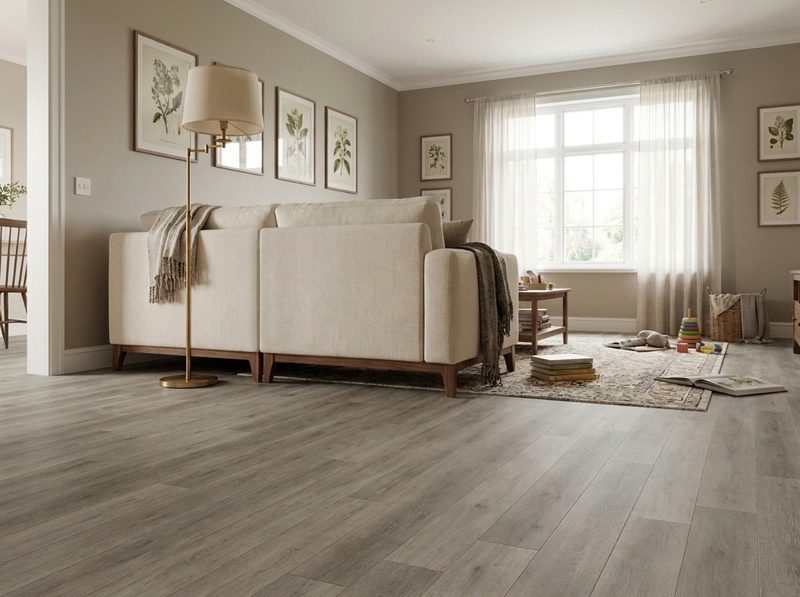
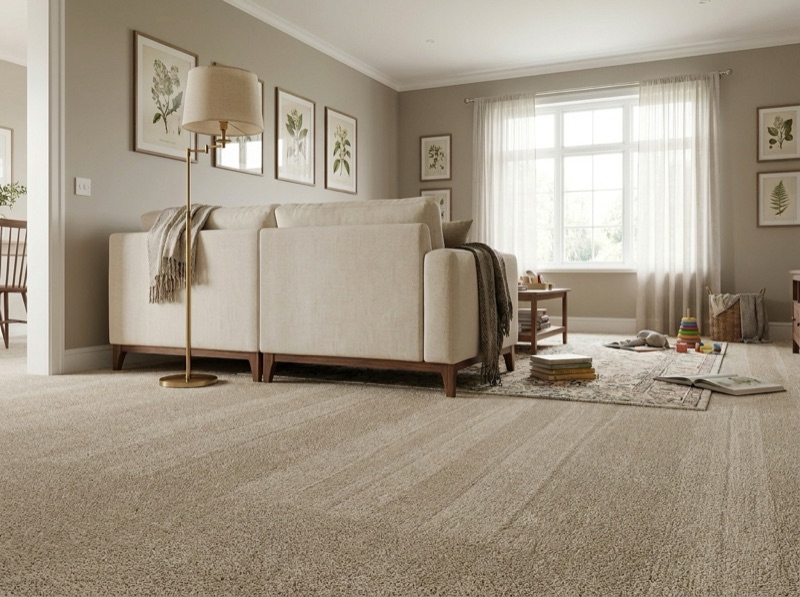
Houses of this era commonly carry an early hardwood floor under later carpet in the main living spaces, a discovery our Ballwin page describes as well, and it is worth checking rather than assuming either way. Where the wood is sound, solid hardwood or engineered hardwood both restore it. Where the subfloor needs a more forgiving surface, luxury vinyl plank handles the settling and prior patches a house this age has accumulated, and carpet remains the answer for bedrooms being renewed rather than reinvented.
Because so many Manchester houses share an age, a project here is also a reasonable moment to think about matching what a previous owner already did well, or deliberately doing something different. Our room by room guide and the vinyl plank against hardwood comparison both cover that decision in more depth.
Making the distance work
The arrangement for a Manchester project is the same one we use up and down this corridor: one showroom visit, planned, at 15570 Veterans Memorial Pkwy in Wentzville, then the free in-home measure and the installation come to you. Bring a board or fragment of the existing floor if a previous owner left one behind, since matching a 1960s or 1970s original is real work best done with a physical sample in hand.
We already cover this stretch of the Manchester Road corridor at Ballwin and Ellisville, and Chesterfield is close by as well. Flooring Correct is family owned. Jonah Paup runs it with his wife Audra, the family has installed flooring since the Paup Boys started in the early 70s, and we hold 140 Google reviews at a 5.0 average. Our published installation process covers what happens after the measure, and it starts with a call: 636-332-0654.
“Amazing, quick, easy experience. My floors look great!! Jonah steered my in the right direction with his expertise on several options I initially wanted to do different, I couldn't be happier with deciding to go with his suggestions!”
Questions from a city built almost all at once
Straight answers about the distance, why Manchester's houses cluster in age, and what that means for your flooring project.
636-332-0654Yes. It is 28.8 road miles and about thirty eight minutes, on the same Manchester Road corridor as Ballwin and Ellisville. The free in-home measure and the installation both come to you after one showroom visit.
Because of how concentrated the build dates are. Some 40.8 percent of the city's housing went up in the 1970s, with another 21.6 percent in the 1980s and 16.5 percent in the 1960s, so most houses reached their current age within the same narrow window.
Often, in a general sense. Houses built in the same few years tend to share subfloor type and construction habits, so what we find opening up one 1970s house is a reasonable preview of what a similar house nearby is likely to have.
Genuinely possible in a house from this era. Builders in the 1960s and 1970s did lay solid wood that later owners carpeted over, and we check what is actually there before recommending refinishing or replacement.
It is Manchester's 1894 building, later restored into City Hall and listed on the National Register of Historic Places in 1979. It is a reminder that the city's civic history predates the mid-century housing boom by decades.
Yes, the free estimate and in-home measure apply in Manchester exactly as they do closer to the showroom. Call 636-332-0654 and we will get a measure on the calendar.
Flooring by material in Manchester
Each of these goes into what the material does in a Manchester house specifically. Start wherever you already have a leaning, or book the free in-home measure and work it out with the samples in front of you.
Get it measured, Manchester
Tell us which rooms and roughly when the house was built. We come to you, check what that decade left behind, and quote from what is actually there.
Free estimate
636-332-0654